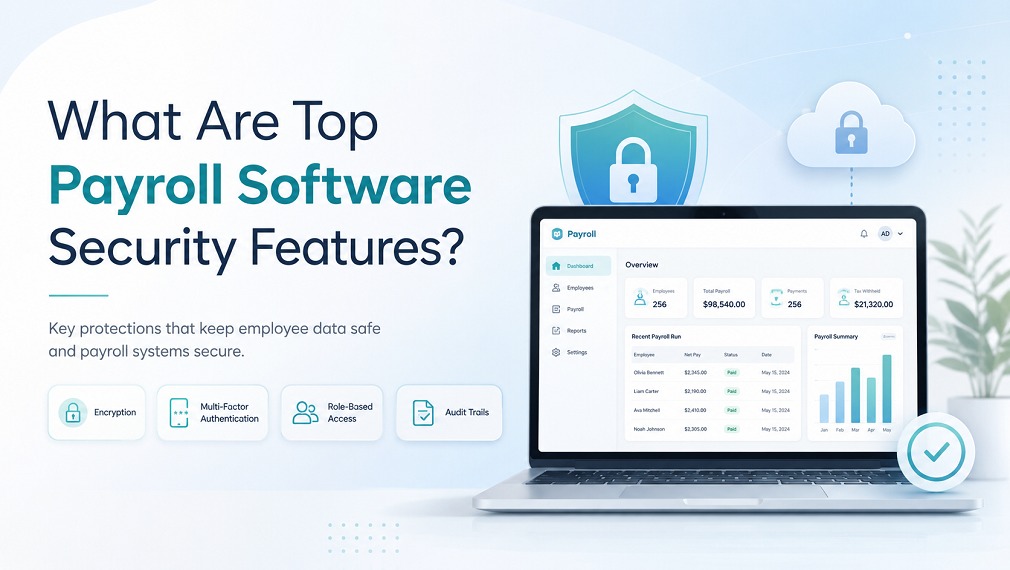
Key payroll software security features include role-based access control, approval workflows, audit trails, secure attendance management, payroll data protection, backups, compliance reporting, and secure employee self-service.
These features prevent errors, abuse, and unauthorized access to salary records, employee information, attendance data, overtime details, leave records, bank information, and payroll reports.
The Payroll Software is no longer just a simple wage-calculation tool for modern enterprises. This is a vital HR security element. A solid system will assist HR professionals accurately process payroll, safeguard sensitive data, and maintain proper records for management and compliance.
This is especially true for organizations in Bangladesh that use HR Software, HRIS Software, HRM Software, and Payroll Software, as many enterprises have large workforces, various shifts, factory attendance, overtime, and compliance documents.
Importance of payroll software security for Bangladesh enterprises
These data demonstrate the extent of worker management in Bangladesh. In a factory, there may be hundreds or thousands of employees. Payroll teams have to manage attendance, shifts, leave, overtime, salary grades, bonuses, deductions, provident fund, loans, and compliance reports, among other things.
Companies therefore need to have secure and reliable HR Software in Bangladesh that can connect personnel records, attendance, approvals, and salary processes into a single, managed system.
What payroll security really means
Payroll security is more than password-protecting software. This means securing the entire payroll process.
Modern HRIS Software in Bangladesh should secure employee data from first attendance to the last payroll report, ensuring all changes are properly regulated, tracked, and approved.
How Jibika Plexus supports secure payroll operations
Payroll security must operate in real business conditions for Bangladesh-based organizations. It should support factory attendance, shift duty, overtime, salary processing, compliance reporting, and HR processes that require approval.
Jibika Plexus is created for the HR and payroll activities of a Bangladeshi business. The software provides attendance management, payroll processing, personnel records, approval procedures, reporting, and mobile access. The solution also covers internal auditing, transaction history verification, multi-layer authorization and access rights, support for the Oracle database, and interaction with attendance devices.
This kind of arrangement is useful for garments, apparel, accessories, spinning mills, textiles, knitting, dyeing, food sector, plastic, footwear, ceramic, steel, hospitals, NGOs, corporate offices, and large organizations.
The aim is not merely to speed up the salary processing. The larger goal is to make payroll more secure, traceable, and easier to manage.
Key Payroll Software Security Features Businesses Should Look For
1. Role-based access control
Role-based access control is one of the most critical security elements of Payroll Software. It allows the company to control who can see, update, approve, or lock payroll data.
For instance, an attendance officer might need to see attendance data but not be allowed to modify salary schemes. A payroll officer can prepare salary, but the ultimate approval should be with management. A department head can approve overtime, but he does not need to know the compensation details of every employee.
Jibika Plexus provides access privileges, limitless user types, admin control, object-level access control, and view and lock controls. This enables firms to reduce internal risk and safeguard employees’ critical data.
2. Multi-layer approval workflow
In a safe HRM Software, not all payroll changes should occur simultaneously. Multi-layer approval establishes a review process before major changes can be finalized.
Attendance corrections, leave approvals, overtime entries, salary adjustments, loans, deductions, and final payroll processing should follow the right approval path.
This is particularly significant in factories, where payroll data is pulled from multiple departments. Production can certify overtime, HR can certify attendance, accounting can certify wages, and management can certify the final payroll.
A solid approval workflow helps keep the process under control and minimize illegal changes.
3. Audit trail and transaction history
An audit trail indicates that the system keeps a record of significant actions. It displays what was modified, who changed it, and when it was changed.
This is one of the most critical factors in payroll security. HR should not always rely on recollection or manual notes in cases of salary disagreements or attendance issues. The system should show real history.
Jibika Plexus HRIS Software has internal auditing and transaction history checks on its feature list. This helps organizations be transparent during payroll review, internal audit, and buyer compliance checks.
4. Secure attendance management
Attendance accuracy is the first step to payroll accuracy. If the attendance data is incorrect, the wage calculation will be incorrect.
Factories have several shifts, late arrivals, early departures, missed punches, vacations, overtime, and leave adjustments. If this data can be altered without control, then payroll becomes dangerous.
A good HRIS Software should link attendance devices to payroll and allow for corrections only via authorized approval. Jibika Plexus enables you to connect attendance devices and implement multi-shift rostering, allowing you to control attendance more precisely.
5. Payroll data protection and secure storage
Payroll data contains private information such as pay, bank details, employee ID, designation, tax records, deductions, bonuses, loans, and other personal records.
A secure Payroll Software should safeguard this data from illegal access and harmful distribution. It should also organize and make employee information available exclusively to allowed users.
Jibika Plexus mentions Oracle database support for ultimate security and speed. Secure storage is essential for companies that maintain large databases of employee information.
6. Backup and disaster recovery
Payroll data should not depend on a device, a file, or a person. Loss, deletion, corruption, or damage to data might delay salary processing.
Backup & disaster recovery protects attendance history, payroll records, employee documents, salary reports, and compliance data.
This is vital for factories and business organizations, as payroll history is frequently required for audits, management reviews, employee inquiries, and legal documents.
7. Compliance-ready reporting
It should also provide for compliance reporting in a secure payroll system. Payroll is more than just paying salaries. It’s also about having the right paperwork.
Salary sheets, pay slips, overtime reports, bonus sheets, deduction records, loan details, provident fund information, attendance summaries, and audit papers are some of the compliance-ready reports.
Compliance documentation, audit logs, and protection of sensitive payroll data from breaches and unauthorized access are highlighted in the Jibika Plexus payroll information. This is vital for Bangladesh’s export-oriented sectors, as many factories operate under domestic laws and the demands of international buyers.
8. Safe employee self-service and mobile access
Employee self-service allows employees to view their own HR and payroll information, such as attendance, leave status, payslips, and profile details.
This reduces the HR personnel’s workload and increases transparency. But it must be accessed securely. Employees should view just their own data, and not that of others.
Jibika Plexus HR mobile access lets you view employee information, attendance, payroll, and approval workflows on a mobile app. It enables faster HR operations and greater control over information.
Final Thoughts
Payroll security is about safeguarding employee information, salary details, attendance records, approvals, and compliance paperwork.
Bangladesh companies’ Payroll Software Secure helps reduce errors, prevent unauthorized changes, and build confidence among employees, HR, accounting, and management.