In the textile world, a fabric’s durability isn’t just about how long it stays in one piece; it’s about how long it stays looking new. One of the most common consumer complaints in the apparel and furniture industries is the development of “pills”—those small, fuzzy balls of fiber that form on the surface of a textile. To address this, laboratories utilize the Martindale Pilling test. This procedure, often referred to as the Pilling Martindale method, is the industry standard for determining a fabric’s resistance to surface fuzzing. By simulating the friction of daily use, this test allows manufacturers to ensure their products remain aesthetically pleasing for years.
The Mechanics of the Pilling Martindale Test
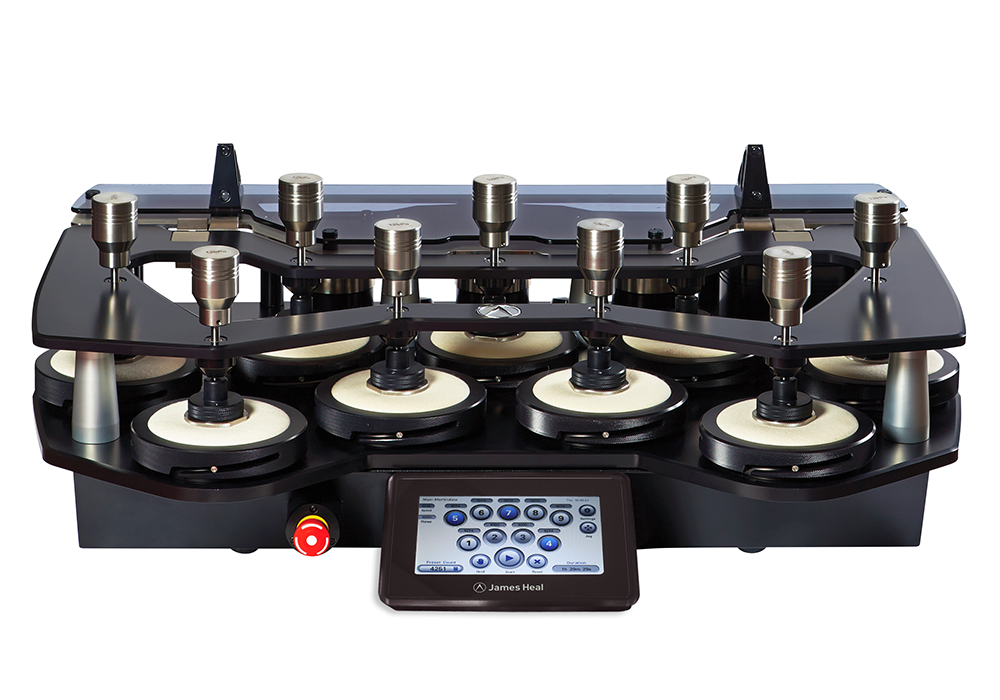
The Pilling Martindale test is performed using the same machine as the abrasion test, but with critical differences in the setup. While an abrasion test seeks to destroy the fabric using a rough wool abradant, a Martindale Pilling test uses a gentler approach. The specimen is typically rubbed against a standard felt or another piece of the same fabric. The motion still follows the Lissajous pattern—a complex, multi-directional curve—but the stroke length is shorter (usually 24mm) and the pressure is significantly lower.
This setup is specifically designed to encourage loose fibers to migrate to the surface. As the Pilling Martindale cycles continue, these fibers become entangled, forming the pills that consumers dislike. The Martindale Pilling test is not just a test of the fiber itself, but of the entire construction of the textile, including the yarn twist, the weave density, and any chemical finishes that have been applied. A high-quality Pilling Martindale result is a clear indicator that the fabric has been engineered to maintain a smooth, clean surface even under stress.
Grading and Interpreting Martindale Pilling Results
Unlike abrasion tests that provide a numerical “rub count,” the results of a Martindale Pilling test are qualitative. After a set number of cycles—usually 500, 1,000, 2,000, or 5,000—the samples are removed and placed in a specialized viewing cabinet. This cabinet uses standardized lighting to ensure that the surface irregularities are clearly visible. A technician then compares the sample to a set of five standard photographs to assign a grade.
- Grade 5: No pilling or surface change.
- Grade 3: Moderate surface pilling; pills of varying size and density.
- Grade 1: Very severe pilling; the surface is almost entirely covered. By achieving a high Pilling Martindale grade, a manufacturer can confidently market their product as “pill-resistant,” which is a major selling point for high-end knitwear and performance upholstery.
Factors Influencing Martindale Pilling Performance
Several variables within the fabric’s DNA affect its Martindale Pilling score. For instance, synthetic fibers like polyester are incredibly strong, which means that once a pill forms, the fiber is strong enough to hold it onto the surface rather than letting it break off. This is why many synthetic blends require a specific Pilling Martindale assessment. Similarly, loosely twisted yarns provide more opportunities for fibers to “leak” out and tangle. By using the Martindale Pilling test during the design phase, textile engineers can adjust these variables—perhaps by increasing the yarn twist or applying a singeing process—to improve the final Pilling Martindale grade.
Technological Innovation with ChiuVention
The ChiuVention Smartindale has revolutionized the Martindale Pilling process. Traditional machines required manual intervention to track cycles and change samples, which increased the risk of human error. The Smartindale, however, is an IoT-connected Pilling Martindale tester. It allows technicians to monitor the test progress via a smartphone app. This is particularly useful for long-duration Martindale Pilling tests where multiple intervals must be checked. With its 9-head configuration, the Smartindale allows for the simultaneous testing of various fabric treatments, drastically speeding up the time-to-market for new, high-performance textiles.