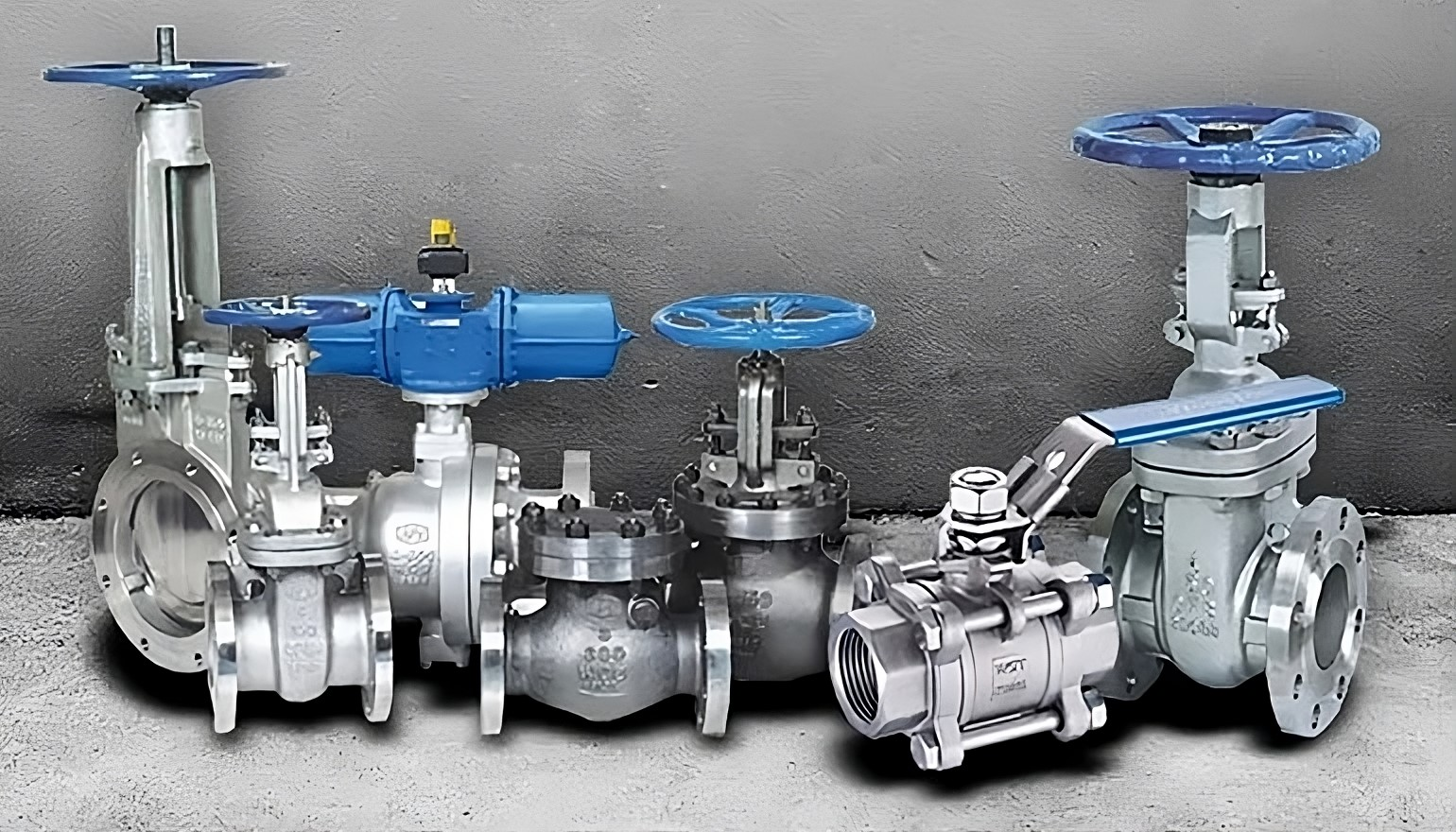
Industrial valves control how fluids move through pipelines and process systems. Whether isolating equipment, regulating flow, or protecting against overpressure, valves play a critical role in industrial safety and efficiency.
This article explains how industrial valves work, the main valve types, and how they are used across different industries.
What Are Industrial Valves?
Industrial valves are mechanical devices used to start, stop, regulate, or direct the flow of liquids, gases, or slurries within a system. They are designed to operate under high pressure, high temperature, and corrosive environments.
Valves are essential in:
- Oil and gas pipelines
- Chemical plants
- Power stations
- Water treatment facilities
- Manufacturing plants
Why Valves Are Critical to Industrial Operations
Valves directly affect:
- Process safety
- Flow accuracy
- Pressure control
- Maintenance isolation
- Emergency response
A single valve failure can disrupt an entire production line.
Major Types of Industrial Valves
Gate Valves
Gate valves are used primarily for isolation. They allow full flow when open and minimal pressure loss.
Best for:
- On/off service
- Applications requiring full bore flow
Ball Valves
Ball valves use a rotating ball to control flow.
Advantages:
- Quick operation
- Tight shut-off
- Long service life
Commonly used in oil and gas and chemical industries.
Globe Valves
Globe valves are ideal for flow regulation.
Used when:
- Precise control is required
- Frequent throttling occurs
Butterfly Valves
Butterfly valves are compact and lightweight.
Ideal for:
- Large-diameter pipelines
- Low to medium pressure applications
Check Valves
Check valves prevent reverse flow.
Critical for:
- Pump protection
- System stability
Valve Materials and Construction
Material selection depends on:
- Fluid type
- Temperature
- Pressure
- Corrosive properties
Common materials include carbon steel, stainless steel, alloy steel, and specialized coatings.
Valve Actuation Methods
Valves can be operated:
- Manually
- Pneumatically
- Electrically
- Hydraulically
Automated valves improve safety, accuracy, and response time.
Common Valve Selection Mistakes
- Using isolation valves for throttling
- Selecting incorrect materials
- Ignoring pressure ratings
- Overlooking automation compatibility
Proper selection prevents leakage, wear, and failure.
Best Practices for Valve Performance
- Match valve type to function
- Ensure correct installation orientation
- Schedule regular inspection
- Monitor sealing performance
- Use automation where safety is critical
Frequently Asked Questions (FAQ)
Which valve is best for flow control?
Globe valves are commonly used for precise flow regulation.
Are ball valves suitable for throttling?
They can throttle, but frequent throttling may reduce lifespan.
Why do valves leak?
Leaks usually result from wear, improper installation, or incorrect material selection.
What is valve actuation?
Actuation refers to how a valve is operated, manually or automatically.
How often should industrial valves be inspected?
Inspection frequency depends on service conditions, but regular checks are essential.
Conclusion
Industrial valves are fundamental to safe and efficient process operations. Understanding valve types, functions, and application requirements helps operators select the right solution and avoid costly failures.